Stop the Suffering in Sudan
Date: March 11, 2026
Sudanese Human Rights Activists
Warning: Text contains descriptions of sexual violence
People are being shot dead in the streets. Soldiers are raping girls as young as 12. Yet arms sales from other countries to Sudan continue. Stop arms sales and protect civilians in Sudan now!
A mother of five told Amnesty International investigators: “One of the soldiers forced me to go with them. They raped me! My 14-year-old daughter came to me as soon as they left. Her clothes were torn and covered in blood, and the back of her hair was covered in dust.”
She and her children tried to flee El Fasher on October 27, 2025, one day after the Rapid Support Forces (RSF) seized control of the city, which at the time had more than 260,000 civilians trapped inside.
The mother told human rights activists that her daughter remained silent for the next few hours until she saw her mother crying: “She said to me, ‘Mom, I was raped too, Mom, but don’t tell anyone.’ My daughter became very ill after the rape! Her health deteriorated when we arrived in Tawila, and she died in the clinic.”
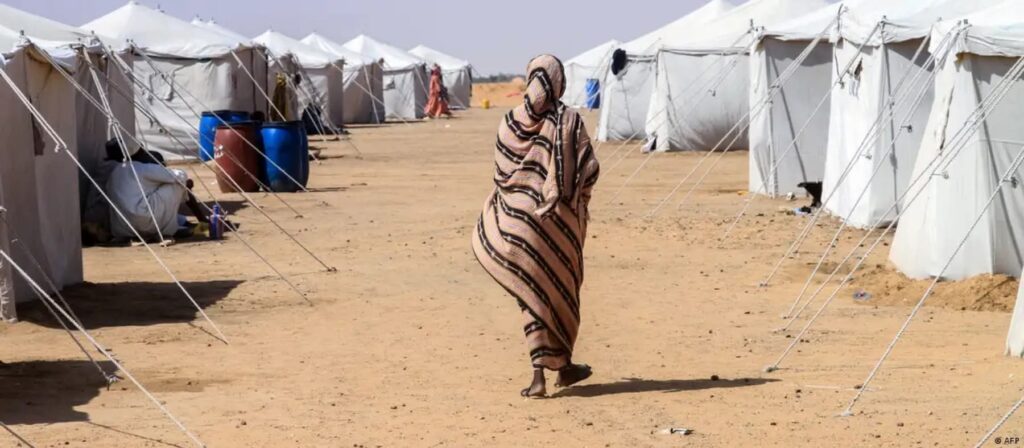
This mother’s story is sadly not unique. The civil war in Sudan has claimed the lives of tens of thousands of civilians, displaced some 14 million people, and created a humanitarian crisis. Women and girls are subjected to systematic gang rape by soldiers. Despite this immense suffering, countries like the United Arab Emirates and others continue to sell and supply weapons to all sides of the conflict.
To protect civilians in Sudan, it is essential to prevent the free flow of weapons into the country. Human rights activists are calling on the UN Security Council to impose an arms embargo on all of Sudan.
The violence is enabled by arms sales:
Several countries contribute to the flow of weapons into Sudan. The United Arab Emirates supplies the Rapid Support Forces (RSF) with everything from advanced bombs to military vehicles, despite this armed group being primarily responsible for massacres of civilians and mass rape.
Amnesty International has also documented the use of military equipment from China, Russia, and several other countries in attacks against civilians.
The UN Security Council imposed an arms embargo on Darfur in Sudan in 2004, but this embargo does not cover the entire country. This regional restriction creates numerous loopholes and ignores the fact that the ongoing conflict is leading to potential war crimes in other parts of Sudan, particularly in Kordofan, where violence against civilians is escalating. Therefore, the UN must ensure that the arms embargo covers all of Sudan.
Human rights activists and Amnesty International are calling on all states to take the necessary measures to halt the sale or supply of arms and related equipment to all parties to the conflict. Furthermore, international and regional actors must exert diplomatic pressure on the RSF leadership to compel them to cease attacks on civilians, including sexual violence against women and girls.
As the conflict continues, survivor testimonies provide further evidence of the international community’s failure to protect civilians in Sudan. Amnesty International will continue to document their stories and testimonies to ensure justice for victims and accountability for those responsible for crimes committed against them.
Human rights organizations and activists have documented war crimes committed by the Rapid Support Forces (RSF) and other armed groups, including ethnically motivated attacks against the Masalit tribe and other non-Arab communities in Darfur and Kordofan.
In April 2025, they also documented widespread and systematic sexual violence perpetrated by the RSF across the country, amounting to war crimes and potential crimes against humanity.
Amnesty International has previously documented how the continued flow of weapons into Sudan is fueling the conflict, in flagrant violation of the arms embargo on Darfur. The United Arab Emirates is supplying the RSF with weapons and other military equipment.
Why is this suffering happening in Sudan? The ongoing conflict between the Rapid Support Forces and the Sudanese army escalated in April 2023. It has resulted in the deaths of tens of thousands of people and the displacement of more than 14 million, leading to what is now the world’s largest humanitarian crisis.